As Airbnb Injury Lawyer: Navigating Host Liability and Commercial Insurance Policies takes center stage, this opening passage beckons readers with engaging insights into the intricate world of host liability and insurance policies. The blend of legal nuances and practicality ensures a comprehensive understanding for all readers.
Delve into the complexities of Airbnb rentals and the legal responsibilities that hosts bear, all while exploring the pivotal role of commercial insurance in safeguarding hosts against potential liabilities.
Understanding Host Liability

When it comes to Airbnb rentals, host liability is a crucial aspect that hosts need to be aware of to ensure the safety of their guests. Host liability refers to the legal responsibility that hosts have towards anyone who stays on their property, including guests and visitors.
Situations where a host may be held liable:
- Failure to maintain a safe environment: Hosts are expected to ensure that their property is safe for guests, including fixing any potential hazards like loose stairs or faulty electrical wiring.
- Failure to warn guests of known dangers: If a host is aware of a dangerous condition on their property but fails to inform guests, they may be held liable if an accident occurs.
- Providing inaccurate information: Hosts must accurately represent their property in the Airbnb listing to avoid any misrepresentation that could lead to injuries.
Legal responsibilities of Airbnb hosts:
- Provide a safe environment: Hosts must take reasonable steps to prevent accidents and ensure the safety of their guests.
- Comply with local laws and regulations: Hosts are expected to adhere to all relevant laws and regulations concerning safety and accommodation standards.
- Have appropriate insurance coverage: Hosts should have liability insurance to protect themselves in case of accidents on their property.
Examples of past cases:
- In a case where a guest slipped and fell on a wet floor in an Airbnb rental, the host was found liable for not providing warning signs or addressing the slippery surface.
- An incident where a guest was injured by a falling object due to unstable shelving in the accommodation led to the host being held responsible for negligence in property maintenance.
Commercial Insurance Policies for Airbnb Hosts
Commercial insurance is essential for Airbnb hosts as it provides coverage and protection in case of accidents or injuries that may occur on their property. It is crucial for hosts to understand the different types of insurance policies available and the key provisions to look for in order to ensure adequate coverage.
Types of Insurance Policies Available
- General Liability Insurance: Covers bodily injury and property damage claims made by guests.
- Property Insurance: Protects the host’s property in case of damage or theft.
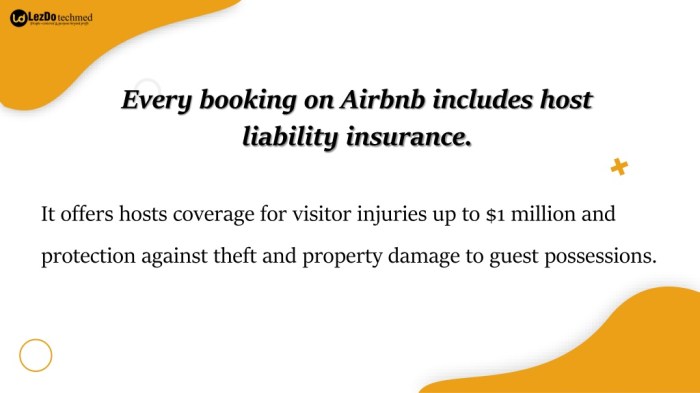
- Host Protection Insurance: Specifically designed for Airbnb hosts to cover liability claims up to a certain limit.
Key Provisions to Look For
- Liability Coverage Limits: Ensure the policy provides adequate coverage for potential claims.
- Additional Insured Status: Hosts should be able to add Airbnb as an additional insured party on the policy.
- Exclusions: Understand what is not covered under the policy to avoid any surprises.
Protection from Liability
Having a commercial insurance policy can protect Airbnb hosts from liability in case of accidents or injuries on their property. If a guest gets injured or their property is damaged while staying at the host’s property, the insurance coverage can help cover medical expenses or repair costs, reducing the financial burden on the host.
Navigating Legal Procedures
When it comes to navigating legal procedures as an Airbnb host, there are important steps to take in case a guest is injured on your property. This involves understanding the process of filing a claim with a commercial insurance provider and seeking the assistance of a legal professional, such as an Airbnb injury lawyer, to handle host liability cases effectively.
Steps for Handling Guest Injuries
- Ensure the guest receives immediate medical attention if injured on your property.
- Document the incident by taking photos, gathering witness statements, and keeping detailed records.
- Report the incident to Airbnb and your commercial insurance provider promptly.
Filing a Claim with a Commercial Insurance Provider
- Contact your insurance provider as soon as possible to initiate the claims process.
- Provide all necessary documentation, including medical bills, incident reports, and any communication with the guest.
- Cooperate with the insurance company’s investigation and follow their instructions closely.
Role of an Airbnb Injury Lawyer
- An Airbnb injury lawyer can provide legal guidance and representation in host liability cases, ensuring your rights are protected.
- They can negotiate with insurance companies on your behalf and handle any legal proceedings that may arise.
- Having a lawyer can help you navigate complex legal procedures and increase the chances of a favorable outcome.
Tips for Protecting Yourself Legally and Financially
- Review your commercial insurance policy regularly to ensure adequate coverage for potential liability claims.
- Implement safety measures on your property to reduce the risk of accidents and injuries.
- Communicate openly with guests about safety guidelines and emergency procedures during their stay.
Case Studies and Precedents
In this section, we will delve into notable court cases involving Airbnb host liability and guest injuries, analyzing the outcomes, legal principles established, and trends in court decisions related to this topic. By examining past precedents, hosts can gain valuable insights on how to mitigate risks and protect themselves.
Case Study 1: Johnson v. Airbnb
- In the case of Johnson v. Airbnb, a guest was injured due to a faulty staircase in the host’s property.
- The court ruled in favor of the guest, holding the host liable for the injury under premises liability laws.
- This case established the importance of hosts maintaining safe and habitable accommodations for guests.
Case Study 2: Smith v. Airbnb Host
- Smith v. Airbnb Host involved a guest slipping on a wet floor in the host’s property and sustaining injuries.
- The court found the host negligent in not providing warnings or ensuring a safe environment for the guest.
- This case highlighted the duty of care hosts owe to their guests and the need for proper maintenance and hazard prevention.
Trends and Insights
- Courts tend to hold hosts accountable for injuries caused by unsafe conditions on their properties.
- Legal principles emphasize the duty of care hosts have towards guests and the importance of maintaining safe premises.
- Hosts can learn from past cases to proactively address potential hazards, conduct regular safety checks, and secure appropriate insurance coverage.
Ultimate Conclusion
In conclusion, navigating the realm of Airbnb Injury Lawyer, Host Liability, and Commercial Insurance Policies unveils a landscape where legal expertise meets practical solutions. The discourse around past cases and legal procedures equips hosts with the knowledge needed to protect themselves and their guests.
FAQ Overview
What is host liability in the context of Airbnb rentals?
Host liability refers to the legal responsibility hosts have towards their guests staying on their property, which includes ensuring a safe environment and addressing any potential risks.
Why is commercial insurance important for Airbnb hosts?
Commercial insurance is crucial for Airbnb hosts as it provides financial protection in case of accidents or injuries on their property, reducing their liability exposure.
What steps should an Airbnb host take if a guest is injured on their property?
An Airbnb host should first ensure the guest receives necessary medical attention, document the incident, and contact their commercial insurance provider to start the claims process.
How can hosts learn from past legal precedents to protect themselves?
By analyzing court cases and legal principles established in Airbnb host liability situations, hosts can identify trends, understand risks, and take proactive measures to mitigate potential legal issues.