Beginning with Trench Collapse Lawsuits: Proving OSHA Violations in Construction Injury Cases, the narrative unfolds in a compelling and distinctive manner, drawing readers into a story that promises to be both engaging and uniquely memorable.
As we delve into the intricacies of trench collapse lawsuits and OSHA violations in construction injury cases, a fascinating exploration awaits.
Overview of Trench Collapse Lawsuits
In the construction industry, trench collapse lawsuits play a crucial role in holding companies accountable for safety violations that lead to serious accidents on construction sites. These lawsuits aim to ensure that construction workers are protected and that proper safety measures are implemented to prevent future incidents.
Common OSHA Violations Related to Trench Collapses
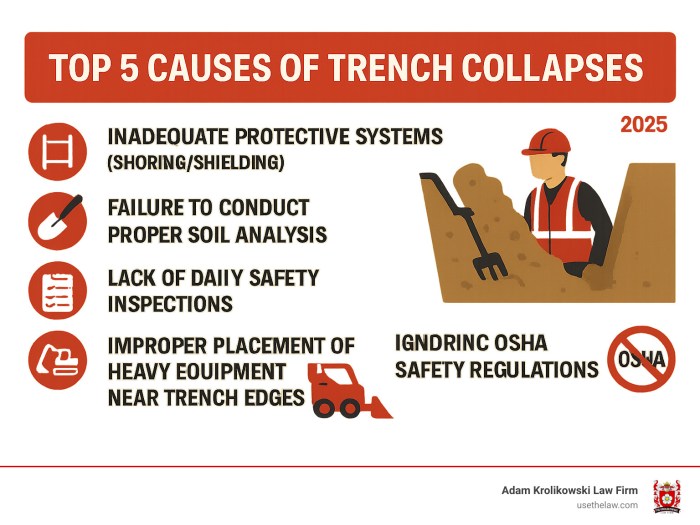
- Failure to provide a protective system for trenches, such as sloping, shoring, or shielding
- Failure to conduct regular inspections of trenches to identify potential hazards
- Failure to provide adequate training for workers on trench safety protocols
- Failure to have a competent person on-site to oversee trench excavation activities
Potential Consequences of Trench Collapse Accidents on Construction Workers
Trench collapse accidents can have devastating consequences on construction workers, including serious injuries such as broken bones, spinal cord injuries, and traumatic brain injuries. In the worst cases, trench collapses can result in fatalities, leaving families devastated and communities mourning the loss of a loved one.
Statistics on Injuries and Fatalities Resulting from Trench Collapses
According to data from the Occupational Safety and Health Administration (OSHA), trench collapses are a leading cause of fatalities in the construction industry. In 2019, there were 17 fatalities related to trench collapses, highlighting the urgent need for companies to prioritize proper safety measures when working in trenches.
Understanding OSHA Regulations
In the construction industry, safety regulations are crucial to prevent accidents and injuries. The Occupational Safety and Health Administration (OSHA) has established specific guidelines for trench excavation and construction sites to ensure the safety of workers.
Key OSHA Regulations
- OSHA requires protective systems to be in place for trenches that are 5 feet or deeper, including sloping, shoring, or shielding.
- Employers must conduct daily inspections of trenches, adjacent areas, and protective systems before work begins.
- OSHA mandates that a competent person must inspect trenches after any occurrence that could affect trench stability.
Specific Safety Measures
- Employers are responsible for providing training to workers on trench safety, including how to recognize hazards and how to safely enter and exit trenches.
- Workers must use protective equipment such as hard hats, safety harnesses, and trench boxes when working in trenches.
- Employers must ensure that trenches are free from water accumulation and that proper ventilation is in place to prevent hazardous atmospheres.
Responsibilities of Employers and Workers
- Employers are responsible for implementing OSHA regulations, providing a safe work environment, and ensuring that workers are trained on trench safety.
- Workers must follow safety protocols, use the provided protective equipment, and report any unsafe conditions to their supervisors.
- Both employers and workers play a crucial role in adhering to OSHA guidelines to prevent trench collapses and protect the well-being of everyone on the construction site.
Proving OSHA Violations in Construction Injury Cases
Proving OSHA violations in construction injury cases is crucial in seeking justice for victims and holding accountable those responsible for unsafe working conditions. In legal proceedings, the process involves gathering evidence to demonstrate that OSHA regulations were violated, leading to the injury or fatality of a worker.
Role of OSHA Regulations as Evidence
- OSHA regulations serve as a standard of safety in the construction industry, outlining specific requirements to protect workers from hazards.
- During a lawsuit, OSHA regulations can be used as evidence to show that the employer failed to comply with safety standards, leading to the injury or death of a worker.
- Inspections, reports, and citations issued by OSHA can be crucial pieces of evidence in proving violations in court.
Examples of Successful Cases
- In a case where a construction worker was killed in a trench collapse, evidence showed that the employer did not provide proper shoring or protection as required by OSHA regulations. This violation led to a successful lawsuit holding the employer accountable.
- Another example is a case where multiple workers were injured due to lack of fall protection on a construction site. OSHA regulations clearly stated the requirement for fall protection, and the violation was proven in court, resulting in compensation for the injured workers.
- By presenting concrete evidence of OSHA violations, construction injury cases can be successfully pursued, ensuring that negligent parties are held responsible for their actions.
Safety Precautions and Best Practices
When it comes to preventing trench collapses on construction sites, there are several safety precautions and best practices that can be implemented to ensure worker safety.
Comparing Safety Protocols: OSHA vs Industry Experts
Both OSHA and industry experts emphasize the importance of following safety protocols to prevent trench collapses. While OSHA sets specific regulations and guidelines, industry experts often provide additional recommendations based on their experience and expertise.
- OSHA Safety Protocols:
OSHA requires protective systems to be in place for trenches that are 5 feet or deeper, with specific requirements for sloping, benching, shoring, and shielding.
- Industry Expert Recommendations:
Industry experts may recommend additional safety measures such as regular soil testing, proper equipment maintenance, and continuous worker training to enhance safety in trench excavation projects.
Best Practices for Ensuring Worker Safety
Implementing best practices is essential for ensuring worker safety in trench excavation projects. These practices help minimize risks and create a safer work environment for construction workers.
- Regular Inspections:
Conducting regular inspections of trenches and surrounding areas to identify potential hazards and address them promptly.
- Proper Training:
Providing comprehensive training to all workers involved in trench excavation, including proper use of safety equipment and emergency procedures.
- Emergency Response Plan:
Developing and implementing an emergency response plan in case of trench collapses, ensuring swift and effective actions to protect workers.
- Communication:
Establishing clear communication channels among workers, supervisors, and safety personnel to convey safety instructions and address concerns promptly.
Concluding Remarks
In conclusion, the journey through Trench Collapse Lawsuits: Proving OSHA Violations in Construction Injury Cases has shed light on the critical importance of safety regulations in the construction industry. As we strive for better practices and accountability, let us remember the lives affected by trench collapses and work towards a safer working environment for all.
FAQ Overview
What are the common OSHA violations related to trench collapses?
Common OSHA violations include lack of proper cave-in protection, failure to conduct inspections, and inadequate training for workers on trench safety.
How can employers and workers adhere to OSHA guidelines effectively?
Employers can ensure proper training for workers, conduct regular inspections, and provide necessary safety equipment. Workers should follow safety protocols, report hazards, and communicate effectively with supervisors.
What are some best practices for ensuring worker safety in trench excavation projects?
Best practices include proper shoring and sloping of trenches, regular safety briefings, emergency response drills, and thorough documentation of safety procedures.